
COVID-19 Internet Response
Research on Internet performance during the pandemic
Overview
The COVID-19 pandemic dramatically increased reliance on home Internet connections for work, education, healthcare, and daily life. Our research examined how the Internet performed during this unprecedented shift and how service providers responded to increased demand.
Research Areas
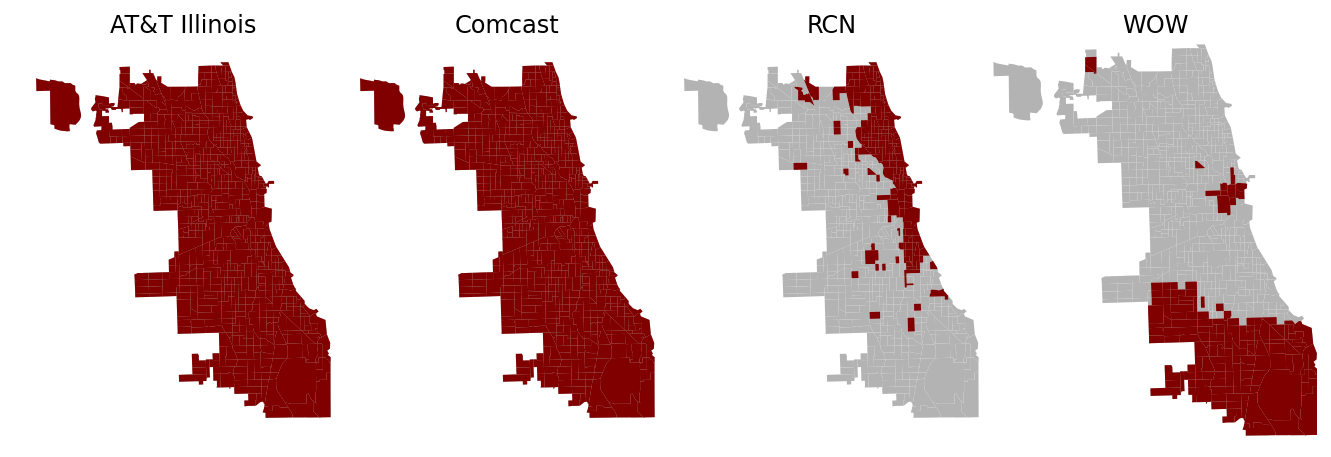
Mapping the Digital Divide
We analyzed Internet connectivity patterns before, during, and after the onset of COVID-19 to understand how the pandemic exposed and exacerbated existing disparities in Internet access across communities.
Service Provider Response
We characterized how Internet service providers in the United States responded to the pandemic, examining changes in network performance, capacity, and service delivery during periods of dramatically increased usage.
Chicago Connected
In partnership with Chicago Public Schools and the Chicago Consortium on School Research, we evaluated how Chicago Connected—a free Internet connectivity program for public school students—benefited groups of students from different socioeconomic backgrounds and residential locations.
Key Findings
- The pandemic exposed significant disparities in Internet access at neighborhood scales
- In Chicago, more than 110,000 children under 18 lacked broadband access at the start of the pandemic
- In certain neighborhoods, nearly half of children under 18 lacked Internet connectivity
- Service providers generally maintained performance despite increased demand
Publications
Mapping the Digital Divide: Before, During, and After COVID-19 Francesco Bronzino, Nick Feamster, Shinan Liu, James Saxon, Paul Schmitt TPRC, 2021
Characterizing Service Provider Response to the COVID-19 Pandemic in the United States Shinan Liu, Paul Schmitt, Francesco Bronzino, Nick Feamster Passive and Active Measurement Conference (PAM), 2021
Impact
This research informed policy discussions about broadband investment and helped demonstrate the critical importance of Internet connectivity for modern life, contributing to increased federal funding for broadband infrastructure.